
The Science of Sound: Amati Strings Brings Music to Discovery Cube
Amati Strings performed at Discovery Cube in Santa Ana, bringing science and music together to explore the fascinating world of sound waves, vibrations, and the beauty of orchestral music.
The Science of Sound: Amati Strings Brings Music to Discovery Cube
What happens when the beauty of classical music meets the curiosity of science? At Discovery Cube in Santa Ana, the answer is an exciting exploration of how vibrations travel through the air, how sound waves reach our ears, and how those invisible waves can create something extraordinary: music.
The youth orchestra Amati Strings brought this connection to life with a special performance at Discovery Cube, a science center dedicated to inspiring children to explore the world through hands-on learning. Surrounded by scientific exhibits and curious young minds, our orchestra demonstrated that science and art are not separate worlds. In fact, they are beautifully intertwined.
From Vibrations to Music
Every musical note begins with a vibration.
When a violinist draws a bow across a string, the string vibrates, setting the surrounding air into motion. These vibrations travel through the air as sound waves until they reach a listener’s ears. The brain then interprets those waves as the sounds we recognize as music.
The same fundamental principle applies throughout the string orchestra.
- Violins produce bright, soaring melodies with rapidly vibrating strings.
- Violas create a rich middle register that adds warmth and depth to the ensemble.
- Cellos produce deep, resonant tones that can be felt as well as heard.
- Piano produces sound when its keys activate hammers that strike strings inside the instrument.
Each instrument creates vibrations in a different way, producing distinct pitches, tones, and textures. When all these sounds combine, individual waves become part of a much larger musical experience.
What begins as simple physical motion becomes a symphony.
The Invisible Waves All Around Us
Sound is a fascinating example of science at work in everyday life.
Unlike light, sound generally needs a medium—such as air, water, or a solid material—to travel. As an instrument vibrates, it creates changes in air pressure that propagate outward as longitudinal sound waves.
The frequency of a sound wave determines its pitch: higher frequencies produce higher notes, while lower frequencies produce lower notes. The amplitude of the wave relates to the sound’s intensity, helping distinguish a quiet whisper from a powerful orchestral passage.
During a live performance, hundreds of these sound waves overlap and interact. Our ears receive the resulting vibrations, allowing us to experience melodies, harmonies, rhythms, and the emotional character of music.
Although we cannot ordinarily see sound traveling through a room, we can hear—and sometimes physically feel—its effects.
Where Science Meets Art
Discovery Cube provides an ideal setting for exploring these ideas. Children visit to ask questions, experiment, and discover the principles behind the world around them. A live orchestra offers another way to experience scientific concepts: not just by reading about them, but by hearing them unfold in real time.
A musical performance can spark questions that connect directly to physics:
- Why does a violin sound higher than a cello?
- How does changing the length or tension of a string affect its pitch?
- Why can several instruments play different notes that still sound harmonious together?
- How does sound travel from the orchestra to someone standing across the room?
These questions reveal that music is not magic in the scientific sense—but understanding the science does not make it any less magical.
In fact, knowing how vibrations become sound can make listening even more fascinating.
A Symphony of Curiosity
For Amati Strings, performing at Discovery Cube was an opportunity to share classical music in a place where curiosity is encouraged.
Children who might not ordinarily attend an orchestral concert could encounter live instruments while exploring a world of science. Parents and other visitors could enjoy the performance while discovering an unexpected connection between musical expression and physical principles.
The experience also highlighted an important lesson for young musicians: music is not only an artistic discipline. It involves mathematics, physics, engineering, and the remarkable way the human brain processes sound.
Every bow stroke, every vibrating string, and every carefully coordinated note reflects both scientific principles and artistic creativity.
Inspiring the Next Generation
Science and music share something essential: both begin with curiosity.
A scientist asks why something happens. A musician explores what can be expressed through sound. Both rely on experimentation, practice, observation, and a willingness to discover something new.
By bringing music to Discovery Cube, Amati Strings hoped to inspire children to appreciate both the scientific wonders behind sound and the beauty that sound can create.
Perhaps a young visitor left wondering how a violin produces its distinctive tone. Perhaps another discovered a new appreciation for classical music. Or perhaps the performance simply encouraged a child to ask a question they had never considered before.
Every one of those possibilities represents the beginning of discovery.
The Beautiful Sound of Science
Our performance at Discovery Cube reminded us that the world is full of connections waiting to be explored. The same vibrations studied in physics classrooms can create music that moves us, comforts us, and brings people together.
Sound waves may be governed by the laws of nature, but what we create with them can be deeply human.
For Amati Strings, it was a privilege to bring the orchestra into a place dedicated to learning and exploration. We hope our music encouraged visitors to listen a little more closely to the world around them—and to recognize that sometimes, one of the most beautiful science lessons begins with a single note.
Because when science and music come together, discovery doesn’t just make a sound.
It becomes a symphony.
Continue reading
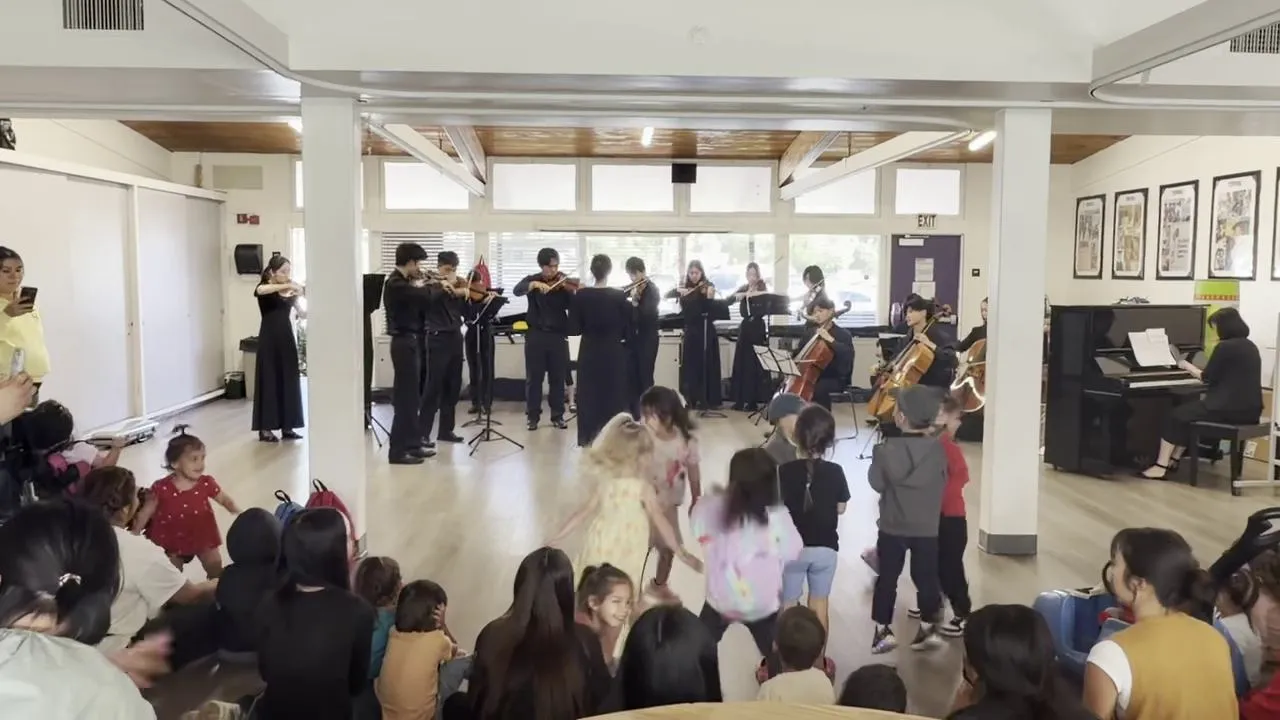
A World of Music Beyond Sight: Amati Strings Performs at Beyond Blindness
Amati Strings shared the gift of music with children at Beyond Blindness, creating a heartfelt experience where young students with visual impairments and disabilities connected through sound, rhythm, and joy.
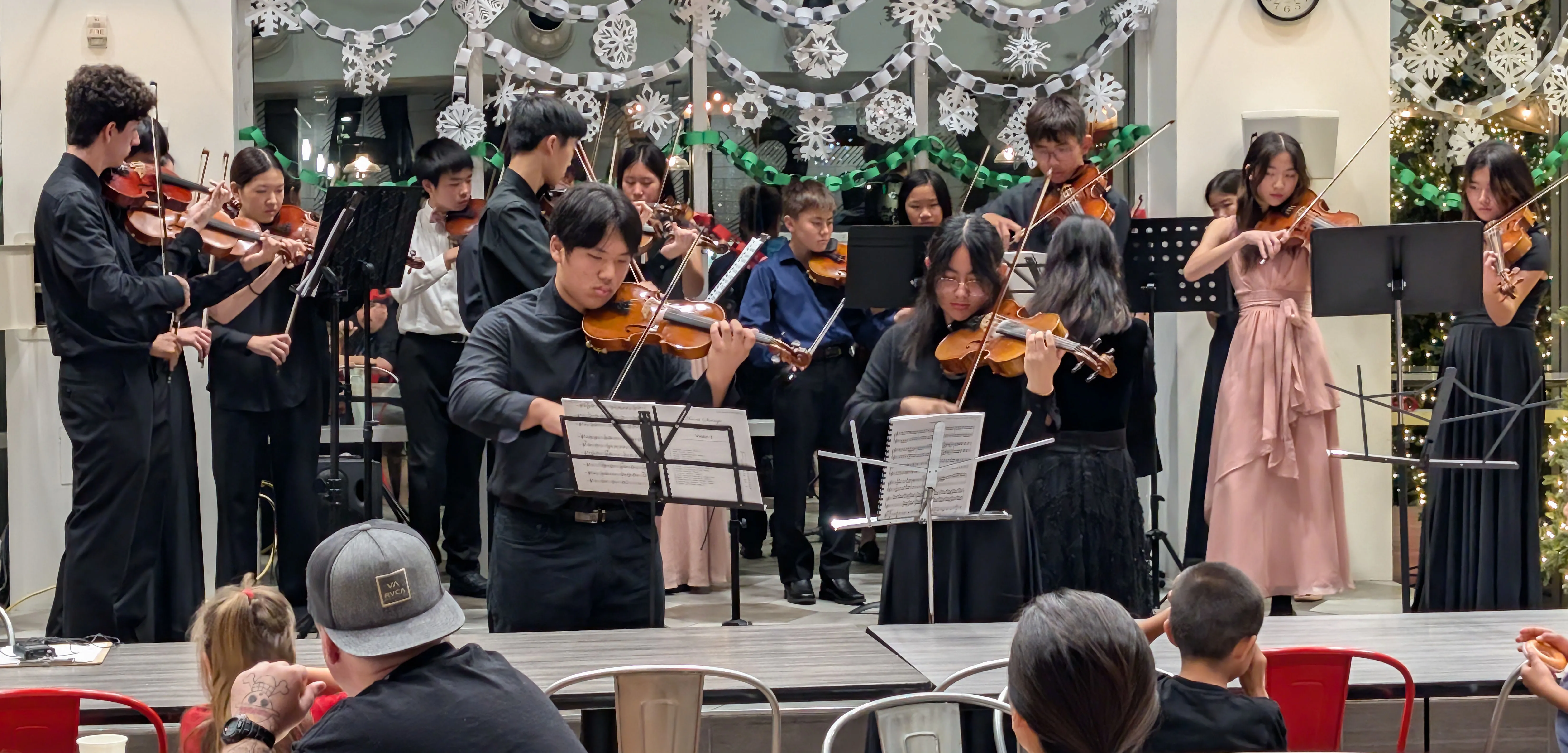
A Meal, a Melody, and a Moment of Joy: Amati Strings at the Orange County Rescue Mission
Amati Strings brought joy, comfort, and connection to families experiencing homelessness at the Orange County Rescue Mission by sharing a live classical music performance during dinner, creating smiles and a welcome moment of happiness amid difficult times.
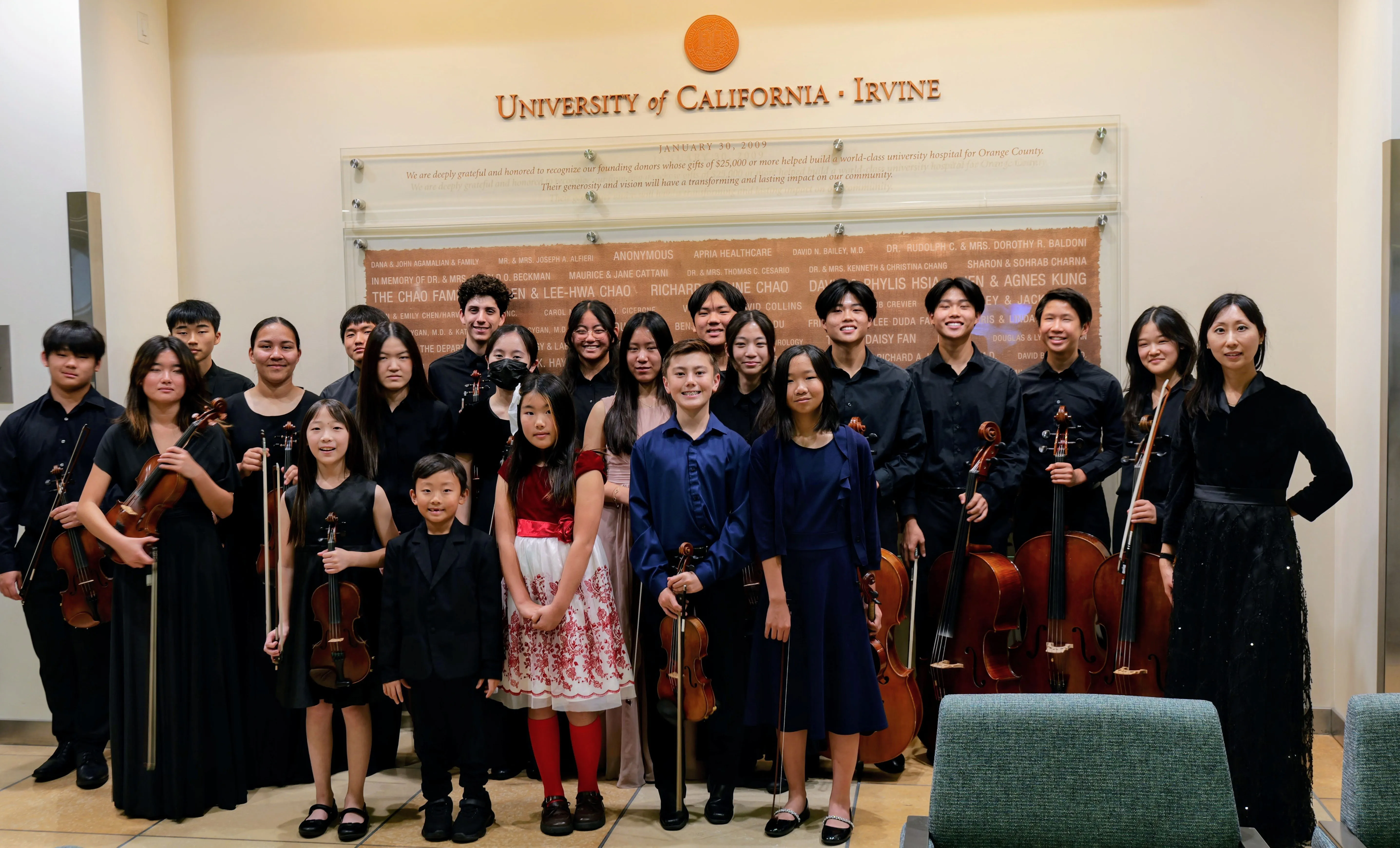
Amati Strings Brings Hope Through Music at UCI Medical Center
A performance by the Amati Strings youth orchestra offered moments of comfort and reflection for patients, visitors, and healthcare professionals at UCI Medical Center.